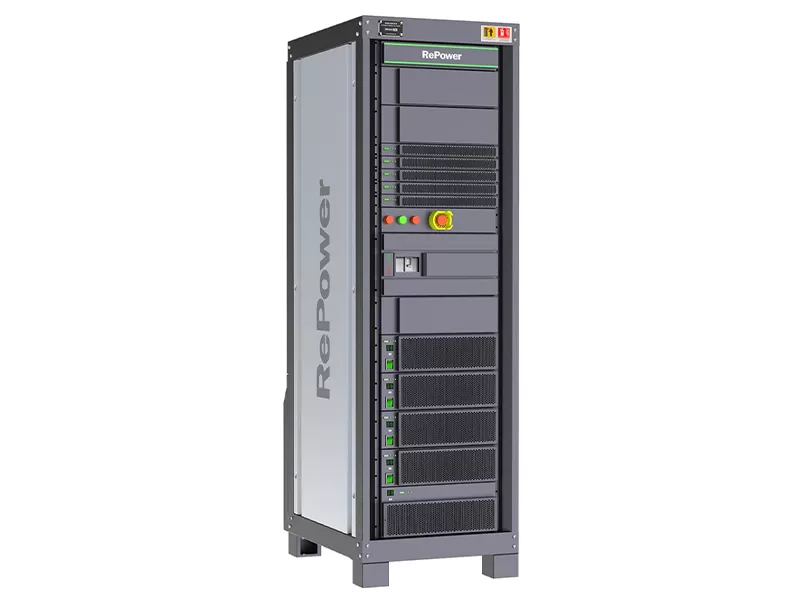
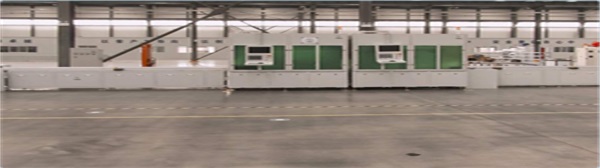
Product classification
The Battery Module PACK Performance Testing Cabinet is designed to evaluate the performance of battery modules and PACKs under simulated operating conditions. This equipment measures critical parameters such as voltage, current, capacity, internal resistance, and thermal behavior. It is essential for quality assurance in EV battery production, energy storage systems (ESS), and advanced R&D applications.
Key Features
· Comprehensive Testing: Supports electrical, thermal, and cycle performance evaluation.
· High Precision: Accurate measurements of voltage, current, and capacity.
· Dynamic Load Simulation: Customizable charge-discharge profiles to replicate real-world conditions.
· Real-Time Monitoring: Continuous data acquisition and visualization.
· Scalability: Configurable for various module and PACK sizes.
Technical Specifications
1. Electrical Performance Testing
· Voltage Range: 0–1,000 V DC.
· Voltage Accuracy: ±0.05%.
· Current Range: 0–300 A (customizable for higher currents).
· Current Accuracy: ±0.1%.
· Capacity Measurement:
o Range: 10 Ah–500 Ah.
o Accuracy: ±0.2%.
· Internal Resistance Measurement:
o Range: 0.1 mΩ–1 Ω.
o Accuracy: ±0.5%.
2. Dynamic Testing
· Load Simulation: Variable load profiles for real-world performance testing.
· Cycle Testing: Programmable charge-discharge cycles (up to 10,000 cycles).
· Data Logging: Voltage, current, capacity, energy, and temperature recorded in real time.
· Cycle Time Accuracy: ±0.1%.
3. Thermal Management
· Temperature Range: -10°C to 80°C (with optional integrated chamber).
· Temperature Accuracy: ±1°C.
· Thermal Monitoring: Sensors for real-time thermal data acquisition.
· Cooling and Heating: Integrated systems for precise thermal control.
4. Mechanical Design
· Cabinet Configuration:
o Modular layout with multiple chambers for parallel testing.
o Adjustable fixtures to accommodate various module and PACK sizes.
· Capacity: Up to 16 modules/PACKs per cabinet.
· Dimensions:
o Length: 2,000–4,000 mm (customizable).
o Width: 1,200–2,000 mm.
o Height: 2,000 mm.
· Weight: 2,000–5,000 kg (depends on configuration).
5. Software and Control
· Control Interface:
o 15-inch touchscreen HMI with an intuitive user interface.
o Multi-language support (English, Chinese, etc.).
· Test Programming: Configurable test parameters and custom profiles.
· Data Analysis:
o Real-time graphing and historical trend analysis.
o Export formats: CSV, Excel, PDF.
o Cloud storage and IoT compatibility for remote monitoring.
· Connectivity: Ethernet, USB, and Wi-Fi options.
6. Safety Features
· Overvoltage and Overcurrent Protection: Ensures equipment and battery safety.
· Short-Circuit Detection: Automatic shutdown upon fault detection.
· Emergency Stop: Manual shutdown button for operator safety.
· Environmental Monitoring: Sensors for smoke, temperature, and humidity detection.
· Certifications: CE, UL, ISO 9001 compliant.
7. Electrical Specifications
· Power Supply: AC 380V ±10%, 50/60 Hz, 3-phase.
· Maximum Power Consumption: Up to 50 kW (depends on configuration).
· Control Voltage: 24V DC for internal systems.
8. Environmental Requirements
· Operating Temperature: 10–35°C.
· Humidity: ≤60% RH (non-condensing).
· Ventilation: Integrated cooling and airflow systems.
Applications
· EV Battery Testing: Performance evaluation of modules and PACKs in electric vehicles.
· Energy Storage Systems (ESS): Reliability testing for grid-scale applications.
· Consumer Electronics: Performance validation for battery modules in portable devices.
· R&D and Quality Assurance: Verification of design and manufacturing consistency.
Maintenance and Warranty
· Maintenance Schedule:
o Weekly: Inspect connectors, fixtures, and sensors.
o Monthly: Calibrate voltage, current, and thermal systems.
o Annually: Perform comprehensive diagnostics and software updates.
· Warranty Period:
o Standard: 12 months.
o Extended: Available on request.
Automation Level
Overall automation rate: 70–90%, depending on configuration.
Automated functions include:
Automated loading/unloading with adjustable fixtures
Automatic switching between test modes (capacity, C-rate, DCIR, thermal simulation)
Closed-loop temperature management
Real-time data acquisition and pass/fail judgment
Intelligent safety protection: over-voltage, over-current, thermal monitoring
System Integration:
Fully compatible with MES/ERP systems
Automated barcode/QR code data tracking
Auto report generation and long-term historical data archiving
Quality & Test Capabilities
Charge/discharge performance test
Capacity & energy measurement
DCIR / ACIR testing
Temperature performance and stability inspection
BMS communication verification (CAN/LIN/RS485)
Safety testing (over-voltage, over-current, insulation resistance)
Full traceability for all tested modules/packs
Customization Capability
Hardware Customization:
Custom fixtures for unique battery module/pack geometries
Flexible channel configurations
Optional regenerative energy recovery for higher efficiency
Software Customization:
Custom HMI interface
Unique test sequences
Dedicated BMS communication protocols
MES/ERP integration
Process Customization:
Tailored test cycles for EV, ESS, consumer electronics, and industrial applications
OEM / ODM Support
OEM Services:
Customer branding on cabinet appearance and software UI
Custom color schemes and control panel layouts
ODM Services:
Complete product design based on customer requirements
Joint development of new testing technology or high-power variants
Engineering support for laboratory layout and production line integration
Flexible Collaboration Models:
Module-only supply
Full turnkey solution (equipment + software + integration support)